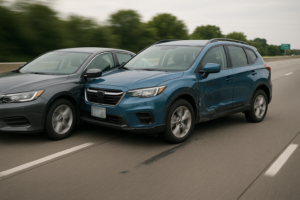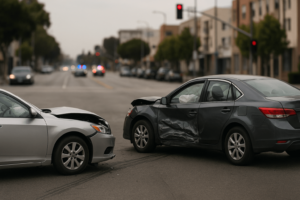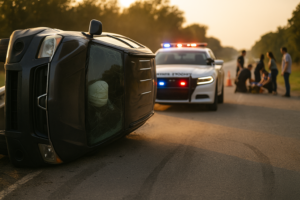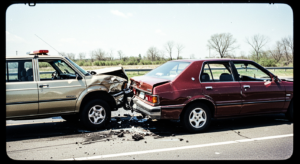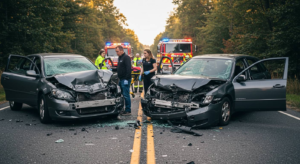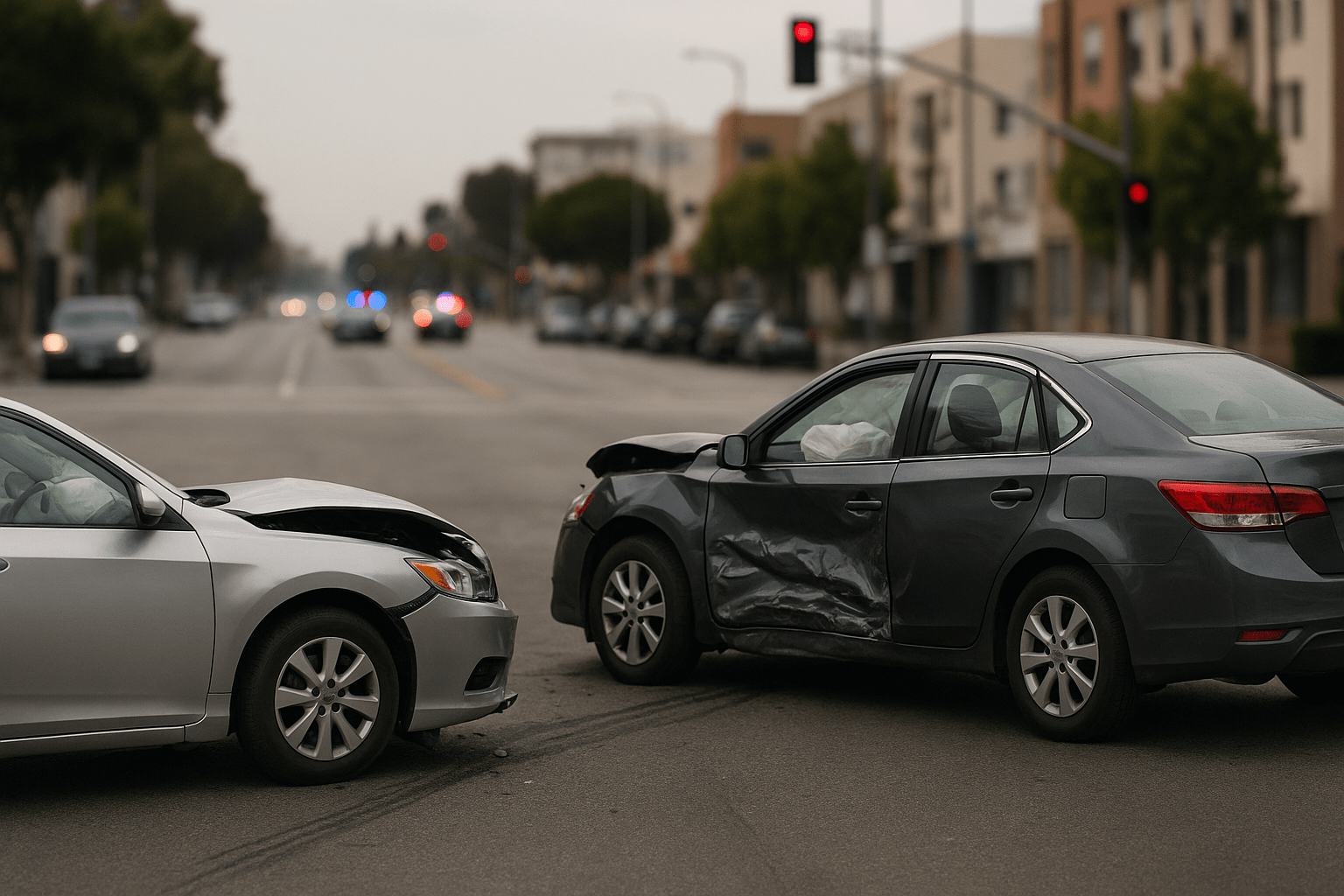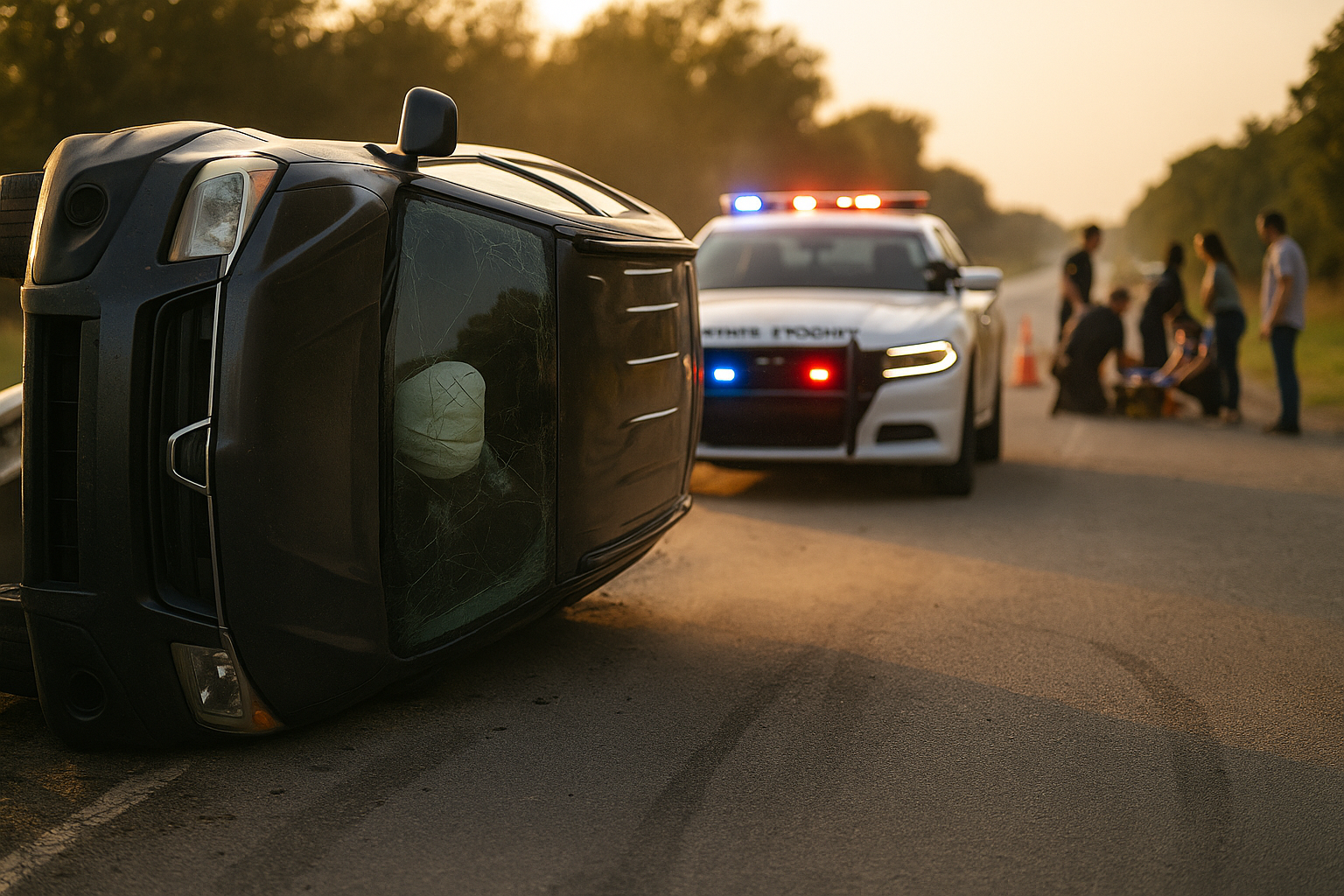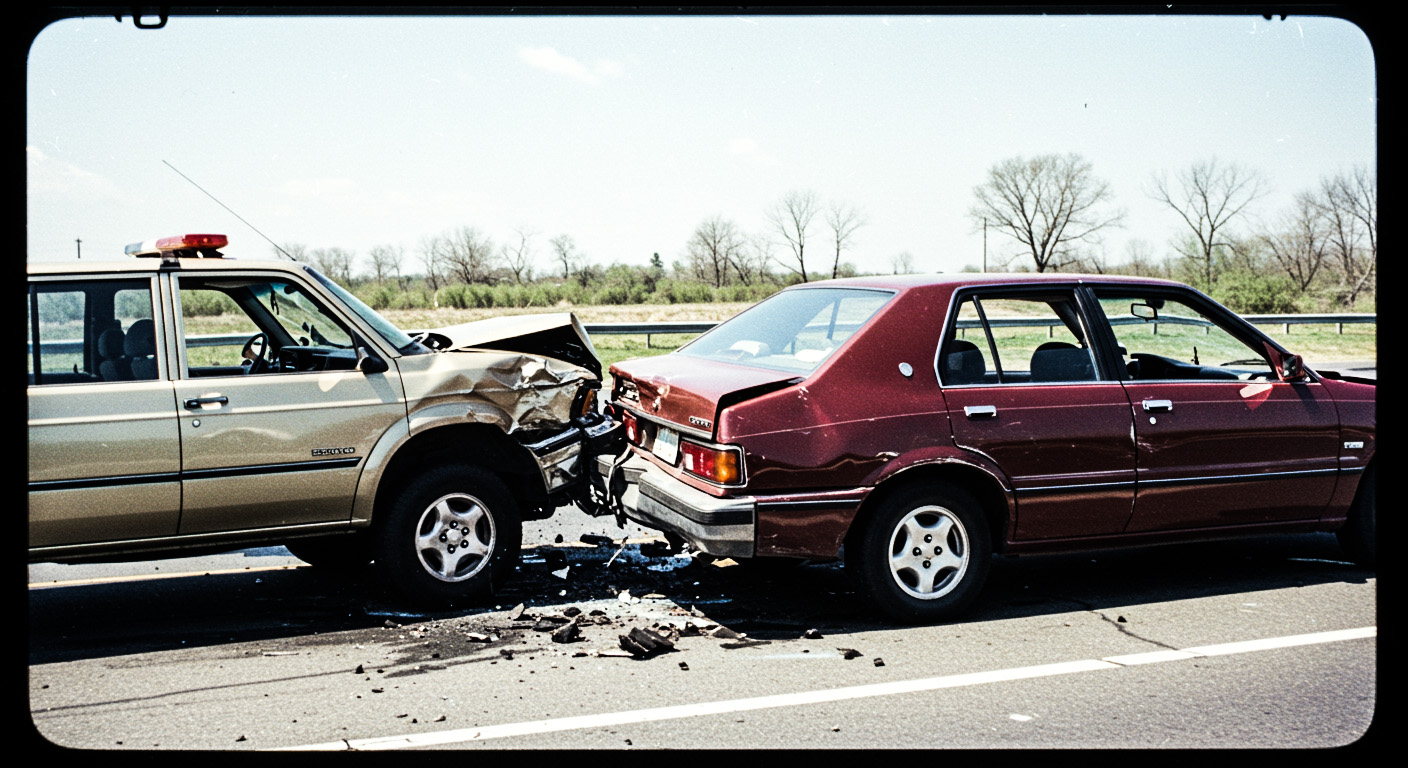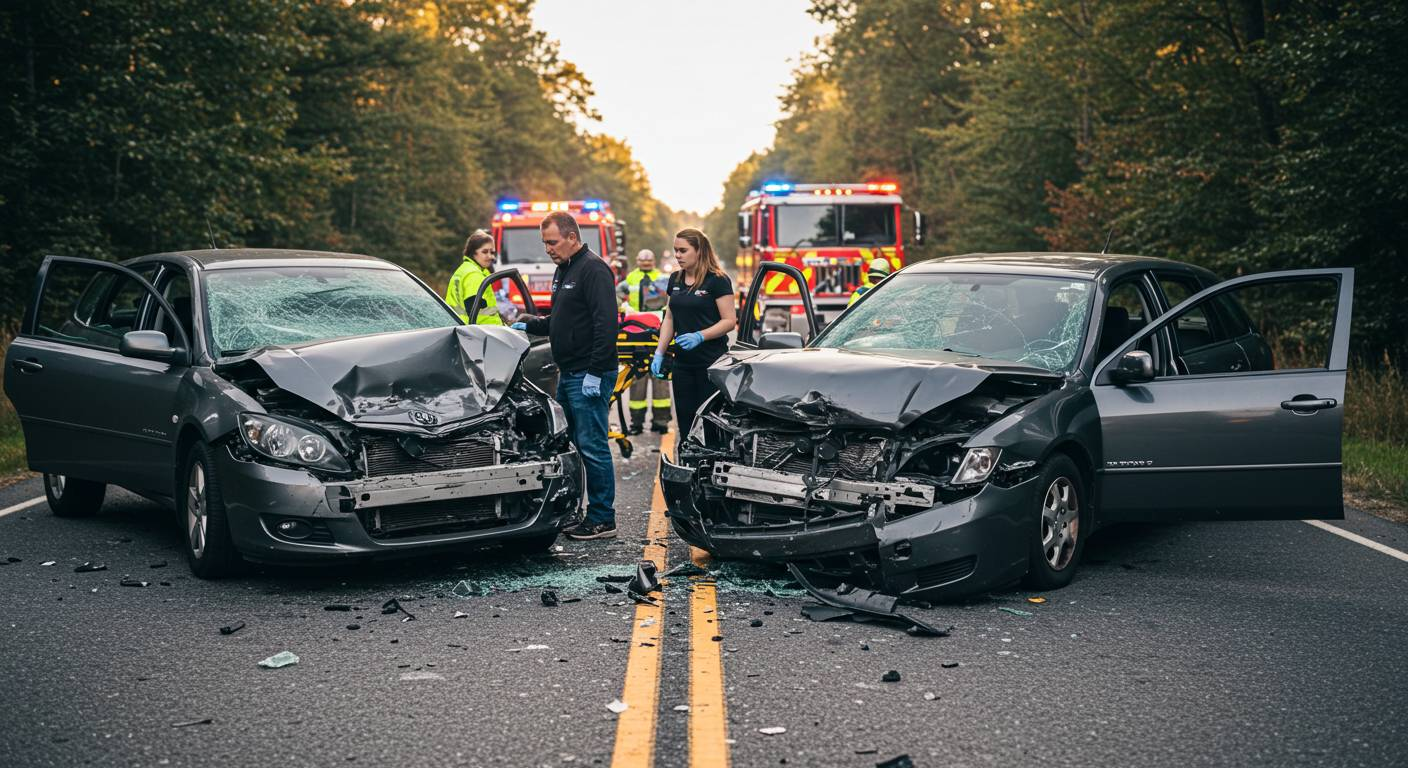


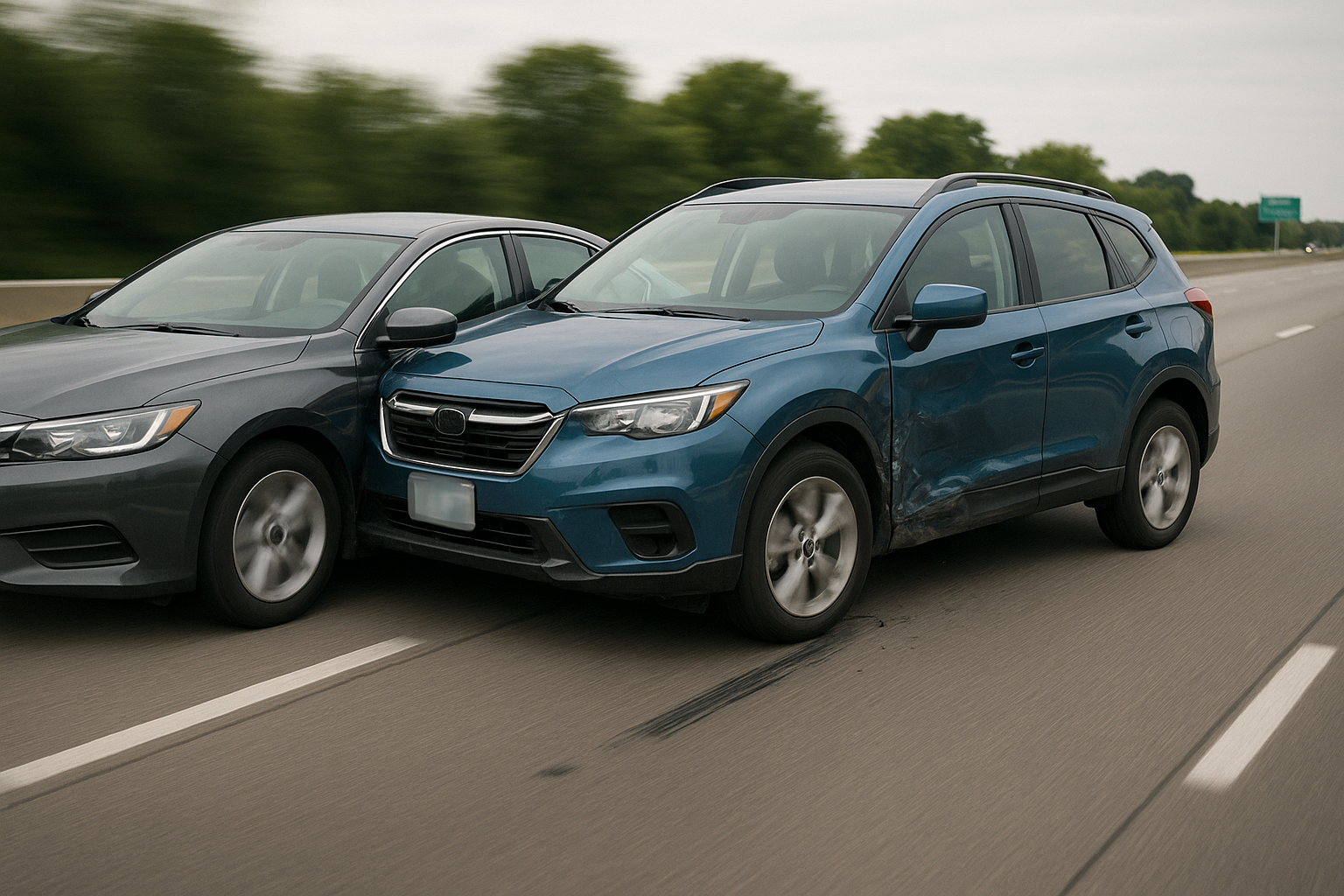
A driver who fails to stay within their lane typically bears responsibility for a sideswipe car accident. Under California law, drivers must remain in a single lane and only change lanes when it is safe and they have properly signaled. If a driver fails to follow this rule and causes a sideswipe crash, a court will typically consider the driver at fault rather than the vehicle that was sideswiped. However, drivers can sometimes share fault if another driver’s actions forced the car to leave its lane.
What Is a Sideswipe Accident?
A sideswipe accident is when two vehicles traveling in the same direction hit each other along their sides. They can also happen when cars travel in opposite directions after avoiding a head-on or rear-end collision. Most sideswipe accidents occur when one of the drivers veers out of their lane at an unsafe moment, regardless of whether they are going in the same or opposite directions.
These crashes prove highly dangerous, especially at highway speeds, because neither the drifting vehicle nor the sideswiped vehicle sees the crash coming, leaving both drivers unprepared for the impact. The sudden impact can cause either driver to lose control or overcorrect while trying to stabilize their vehicle.
The reaction to a sideswipe accident often triggers a chain reaction where cars exit their lanes, strike other vehicles, and hit barriers or objects, leading to multi-car collisions or sudden braking that results in high-speed rear-end crashes. Drivers must understand what causes sideswipe accidents and how to respond if they are the victims.
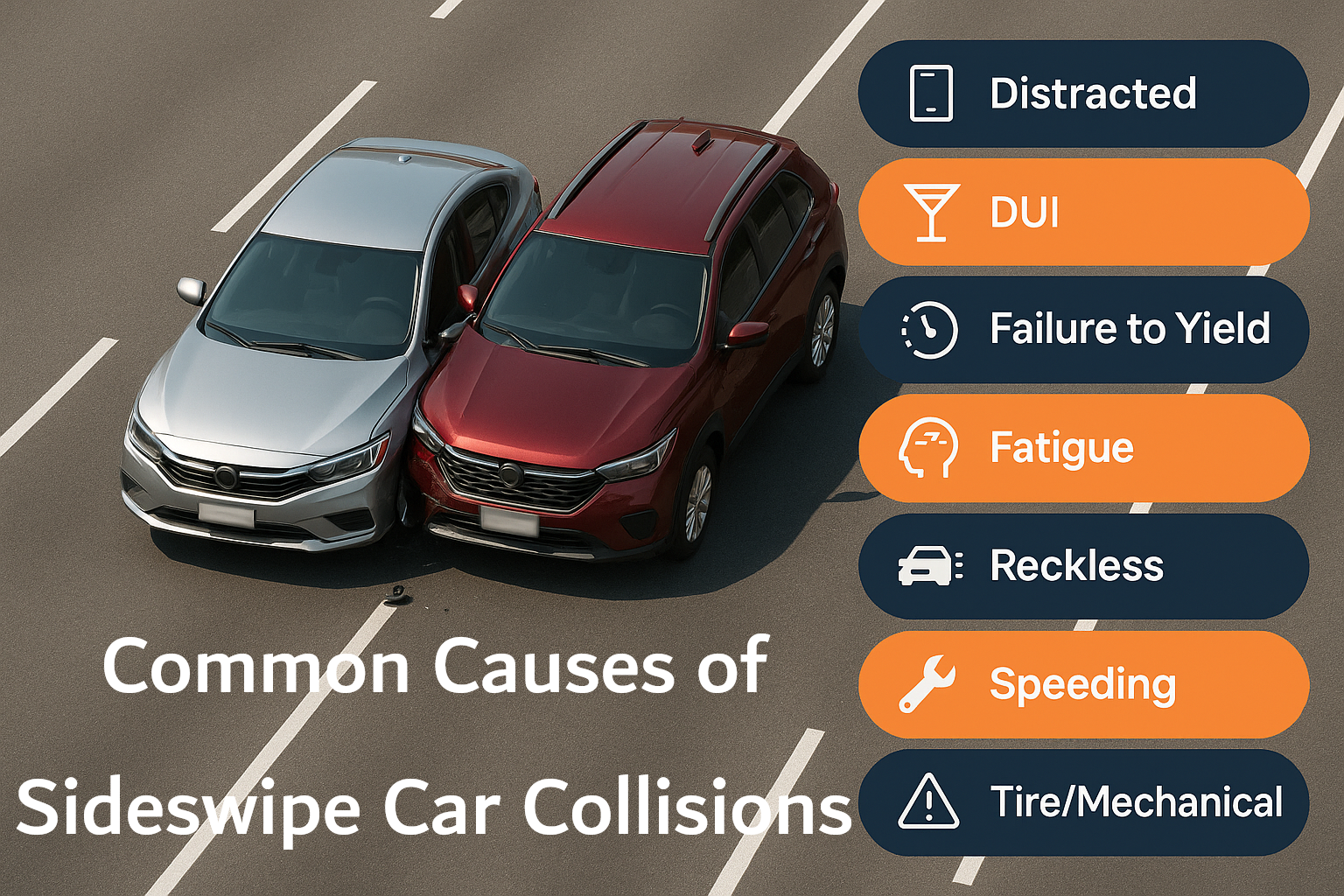
Common Causes of Sideswipe Car Collisions
Many factors can lead to sideswiping a car, but careless driving remains the top cause. Drivers who lose focus often drift into neighboring lanes, resulting in a sideswipe that can even lead to subsequent T-bone crashes and other types of traffic accidents. Find some of the most common causes of sideswipe collisions below.
Distracted Driving
Drivers who get distracted behind the wheel put other drivers on the road in danger. These motorists often trigger sideswipe crashes when they lose focus due to texting, talking on the phone, chatting with passengers, using gadgets, or adjusting the radio or GPS.
Driving Under the Influence
Operating a vehicle while under the influence of drugs or alcohol severely affects a person’s control and judgment. These substances can blur a driver’s vision and slow their reaction time, often leading them to change lanes without checking or unintentionally drift into adjacent lanes.
Failure to Yield
When behind the wheel, drivers must yield to approaching vehicles. Always reduce speed and check both directions before merging. Drivers who ignore this step and change lanes without caution increase the risk of triggering a sideswipe collision.
Fatigue
Fatigue frequently affects truckers and commercial vehicle operators who spend extended hours on the road. Long shifts can lead to sleep deprivation and low energy, a condition known as driver fatigue, which threatens highway safety. Tired drivers behind the wheel often drift into adjacent lanes or make risky choices because exhaustion dulls their awareness and decision-making abilities.
Reckless Driving
Reckless driving often leads to sideswipe accidents. Drivers who weave in and out of lanes, demonstrate road rage, or operate their vehicles carelessly can easily cause these collisions.
If a reckless or careless driver injures you in a sideswipe accident, reach out to Unity Law Group right away. You could be entitled to financial compensation for your injuries and related losses.
Speeding
Drivers who exceed the posted speed limit elevate their chances of causing a sideswipe accident. Speeding increases the likelihood of losing control and colliding with vehicles in neighboring lanes. It also shortens the time available to react and brake properly, which can result in slamming on the brakes and skidding into the next lane.
Tire Blowouts and Mechanical Issues
Tire blowouts and other mechanical failures can cause a sudden loss of control, leading to sideswipe car accidents. When a tire bursts or a steering component fails, the vehicle may veer abruptly into an adjacent lane, striking another car. These issues often occur without warning, leaving drivers with little time to react. Poor vehicle maintenance or undetected defects increase the likelihood of such failures and the risk of collisions.
Unsafe Road Conditions
Unsafe road conditions significantly increase the risk of side-swipe car accidents. Potholes, uneven pavement, poor lighting, a lack of lane markings, and wet or icy surfaces can cause drivers to drift into adjacent lanes unintentionally. When visibility is low or a driver attempts to avoid obstacles by making a sudden maneuver, the risk of brushing against another vehicle increases. These hazardous conditions make it harder to maintain safe lane discipline.
What to Do After a Sideswipe Car Accident in 6 Steps
Like any motor vehicle collision, taking prompt and proper action right after the crash can significantly impact the result of your claim. If you experience a sideswipe accident, adhere to the following six steps to protect your interests:
- Contact 911 — Even if the accident does not cause serious injuries, you should report the crash and have law enforcement arrive to assess the accident scene. In some instances, the police report may identify the at-fault party.
- Record the Crash Scene — Capture images of the vehicle damage, surrounding area, skid marks, scattered debris, and any road hazards that may have played a role in the collision.
- Swap Information — Gather the other driver’s name, phone number, driver’s license number, insurance information, and vehicle specifics.
- Find Witnesses — If someone observed the crash, collect their contact info and account of what happened. Their statement can support your case by proving liability.
- Get Medical Attention — Even if you feel okay, injuries such as whiplash and internal damage might not create symptoms immediately. Save all records of your treatments and medical expenses.
- Speak with a Car Accident Attorney — Insurance companies will attempt to reduce your payout. A lawyer can guide you through the claims process, fight for compensation for your pain and suffering, and make sure your rights stay protected.
If you sustained injuries in a sideswipe collision and need legal support, reach out to Unity Law Group for a no-cost consultation. We will work hard to secure the compensation you need.
Determining Liability After a Sideswipe Collision
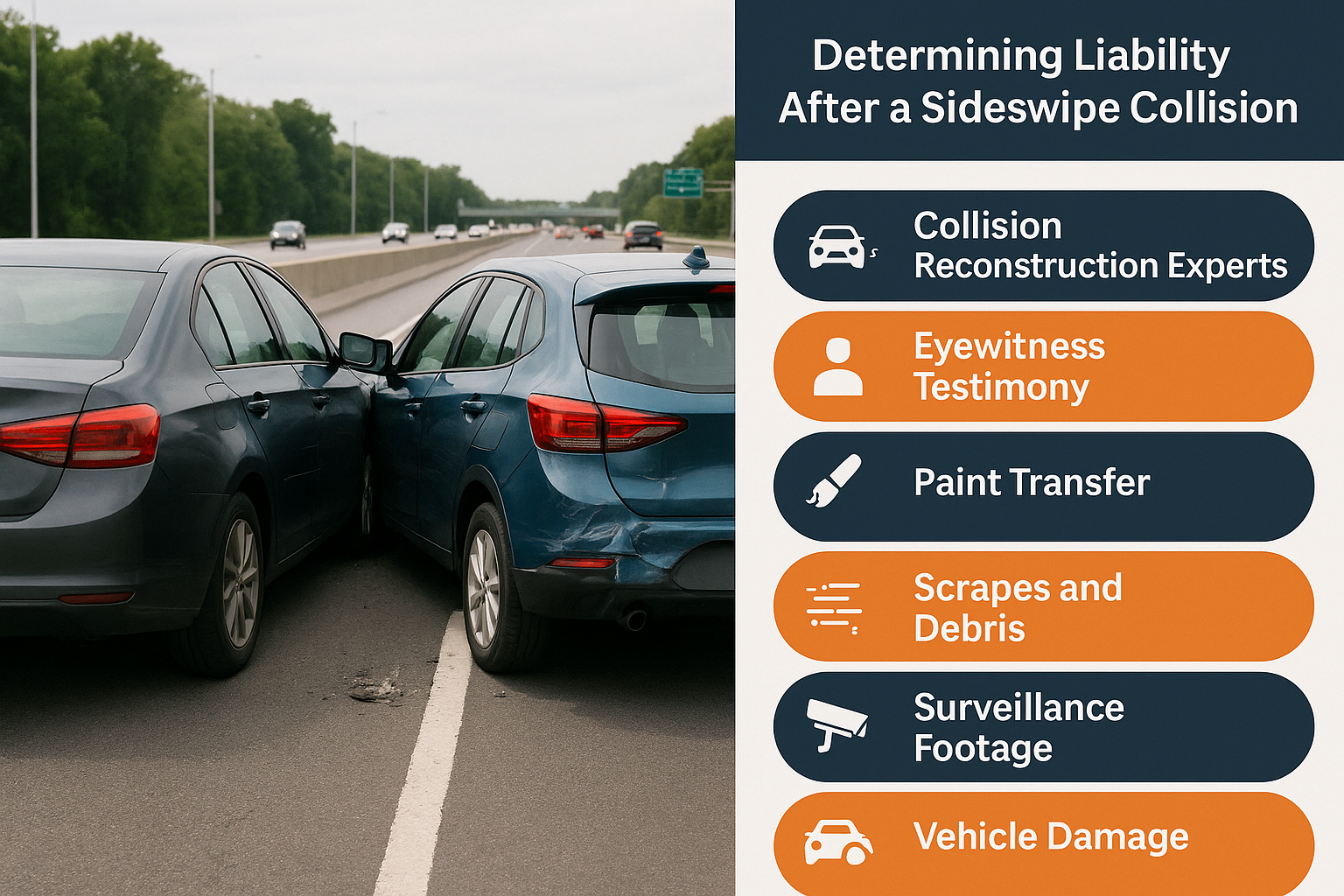
In a sideswipe collision, the driver who drifted out of their lane or broke traffic laws is typically considered responsible. However, insurance providers rely on the California Code of Regulations to identify who caused the crash.
Figuring out fault in sideswipe accidents remains a key focus for insurers. Usually, the driver who fails to check their blind spot or does not signal a lane change is held liable. Still, in some situations, both drivers may share blame if they try to merge into the same lane at the same time.
Collision Reconstruction Experts
Bringing in accident reconstruction specialists can help in complicated, contested sideswipe crash cases.
These experts focus on examining physical evidence, piecing together the sequence of events, and offering professional testimony. Their knowledge clarifies how sideswipe accidents happen, making it easier to prove fault.
Their evaluations and expert insights exert a powerful influence in insurance disputes and court cases, offering a neutral, evidence-based view of the crash. If the accident led to serious injuries, their professional assessment can also strengthen claims for pain and suffering compensation.
Eyewitness Testimony
Witnesses play a key role in establishing fault in a sideswipe accident. Their statements and observations offer important details about how the incident unfolded and what each driver did.
Gathering contact details from witnesses makes it possible to obtain their statements, which can support insurance claims and personal injury claims. Their neutral observations can confirm or dispute the drivers’ accounts, offering extra viewpoints to evaluate.
Witness statements provide key insights into vehicle speed, positioning, and any reckless driving noticed before the sideswipe. Reaching out to eyewitnesses quickly and including their input helps determine fault and supports your pursuit of fair compensation.
Paint Transfer
By analyzing the color, texture, and placement of transferred paint, specialists can determine whether the paint on one vehicle matches the surface of the other. If the paint samples correspond, it provides strong evidence that the car with the matching paint was involved in the collision.
Scrapes and Debris
Scuff marks and scattered debris on the vehicles or roadway offer critical evidence when identifying fault in a sideswipe collision.
The size, angle, and position of even minor scrape marks help determine which vehicle caused the sideswipe. If scratches and damage mainly appear on one car’s side while the other shows little or no impact, it reveals the direction of the collision.
Finally, the location and spread of debris help confirm the at-fault driver. It indicates the specific lane where the collision occurred. For this reason, always take clear photos of all debris following a sideswipe crash.
Surveillance Footage
Footage from dashcams and security cameras has grown more valuable in analyzing sideswipe accidents because it delivers a direct, unbiased visual account of the incident.
Quickly obtaining video footage before it is deleted or lost is essential. By moving fast to locate possible video sources and request the recordings, you can preserve key evidence that may reinforce your claim.
Skilled review of the footage clarifies the order of events and pinpoints fault with precision. Using video evidence strengthens your position when pursuing rightful compensation for losses caused by a sideswipe accident.
Vehicle Damage
A crucial part of assigning fault in a sideswipe collision involves closely examining the damage each vehicle sustained.
In a sideswipe collision, specialists often notice focused damage along the vehicles’ sides. Marks such as scratches, scuffs, and dents stretching down the length of the cars reveal the direction and movement of the impact.
By carefully analyzing the damage patterns, law enforcement, crash investigators, and insurance assessors can collect proof to piece together the events and identify which driver caused the sideswipe. This detailed review of physical evidence proves essential when reconstructing the incident and correctly assigning responsibility.
Types of Common Injuries Sustained in Sideswipe Accidents
A sideswipe accident often happens without warning and poses grave danger due to its sudden nature. The extent of injuries typically depends on where the impact hits the vehicle and the types of vehicles involved in the collision.
Other than the doors, vehicle sides offer limited protection and have few safety features to reduce injury. In a head-on collision, the engine and airbags absorb much of the force, while in a rear-end crash, the trunk provides a buffer between the passengers and the striking vehicle. However, the sides remain vulnerable. Because of this fact, passengers seated on the impact side often suffer the most severe injuries.
Additionally, a sideswipe can force a vehicle to crash into another car or a roadside object. Injuries often become more severe when there is a substantial size mismatch between the vehicles. For example, if a semi-truck sideswipes a compact car, the smaller vehicle’s passengers are more likely to experience serious harm due to the weight and size disparity.
Sideswipe collisions can lead to significant injuries, including:
- Bone fractures
- Burns
- Concussions
- Contusions
- Hip damage
- Internal injuries
- Knee injuries
- Lacerations
- Neck and back Injuries
- Spinal cord injuries
- Traumatic brain injuries
- Whiplash
Many of these injuries can seriously affect a person’s ability to live normally for a long time. People hurt in sideswipe accidents often deal with chronic pain, reduced mobility, and emotional distress. In some cases, their families also suffer, feeling helpless and overwhelmed as they struggle to support their loved one’s recovery.
If a careless or reckless driver caused your sideswipe injury, reach out to Unity Law Group right away. Our team works tirelessly to help victims secure compensation for their injuries and losses.
Compensation for Sideswipe Accidents
People involved in sideswipe accidents may have the right to recover compensation for some of the losses they incurred. Common types of damages claimed in these accidents include:
- Medical bills
- Physical pain and suffering
- Loss of Enjoyment of Life
- Future medical care
- Emotional/Mental distress
- Aggravation/Worsening of a pre-existing condition
- Lost wages
- Loss of Consortium
After a crash, injured drivers have up to two years to file a personal injury lawsuit against the responsible party. If the accident results in a fatality, the victim’s family has up to two years from the date of death to pursue a wrongful death claim. However, if the claim targets a government agency, the time limit drops to just six months. If you are thinking about suing to recover damages, hiring a personal injury lawyer is one of the smartest steps you can take.
Request a Free Consultation With an Experienced Car Accident Lawyer
To protect families and communities, the courts must hold negligent individuals responsible for their actions. Since 2010, Unity Law Group has helped injury victims fight for their dignity, their fair compensation, and the best outcome possible for their case. Our attorneys have supported clients from all over California to secure financial recovery for their losses. With millions of dollars recovered for our clients, you can trust that Unity Law Group will fight hard to defend your rights and pursue the compensation you deserve. Fill out our online form for a free, no-obligation consultation or call Unity Law Group at (844) 864-8939 today!